Side by side
| Property | PORON® 4701-40 (soft) | PORON® 4701-50 (firm) | BISCO® HT-800 (medium) |
|---|---|---|---|
| Chemistry | Microcellular polyurethane | Microcellular polyurethane | Closed-cell silicone |
| Density | ~15 lb/ft³ (240 kg/m³) | ~30 lb/ft³ (480 kg/m³) | ~22 lb/ft³ (352 kg/m³) |
| CFD @ 25% | 4–11 psi (27–76 kPa) | 15–45 psi (103–310 kPa) | 6–14 psi (typ. 9.7 psi / 67 kPa) |
| Continuous temperature | −51 to +90°C | −51 to +90°C | −55 to +200°C |
| Compression set | < 5% | Low | Low |
| Flammability | FMVSS 302; UL 94 V-0 on 40V0 grade; HF-1 grades | FMVSS 302 | UL 94 V-0 and HF-1 |
| Smoke / toxicity | — | — | ASTM E162, ASTM E662, SMP 800-C |
| Food / medical contact | — | — | FDA 21 CFR 177.2600 compliant |
| Recommended PSA | 3M 467MP / 468MP | 3M 468MP | Silicone / acrylic dual-liner |
| Raw sheet, 1/16" | $2.50–$5.50/ft² | $3.50–$7.00/ft² | $4.00–$9.00/ft² (1/16"–1/8") |
Choose PORON® when
- continuous temperature stays at or below 90°C (consumer electronics, interior automotive, most EV module interiors away from cells under thermal runaway mitigation);
- you need the lowest closure force for thin plastic housings: 4701-30 starts at 2–4 psi;
- you want standard acrylic PSA (467MP / 468MP) and kiss-cut parts on liner at the lowest cost;
- UL 94 V-0 is required but a 40V0 grade covers it.
Choose BISCO® HT-800 when
- the part sees more than 90°C continuous, or must survive 200°C (power electronics, lighting, near-cell battery locations, engine bays);
- the program audits smoke and toxicity (rail, aircraft interiors, mass transit): ASTM E162 / E662 and SMP 800-C data exist for HT-800;
- UV, ozone and outdoor weathering matter; silicone shrugs them off;
- the part touches food or skin and needs FDA 21 CFR 177.2600 compliance.
Adhesive: BISCO® silicone needs a silicone adhesive on the foam side. A 200MP acrylic (467MP / 468MP) will not hold. Budget about 45% on top of the foam cost for a dual-liner silicone/acrylic PSA.
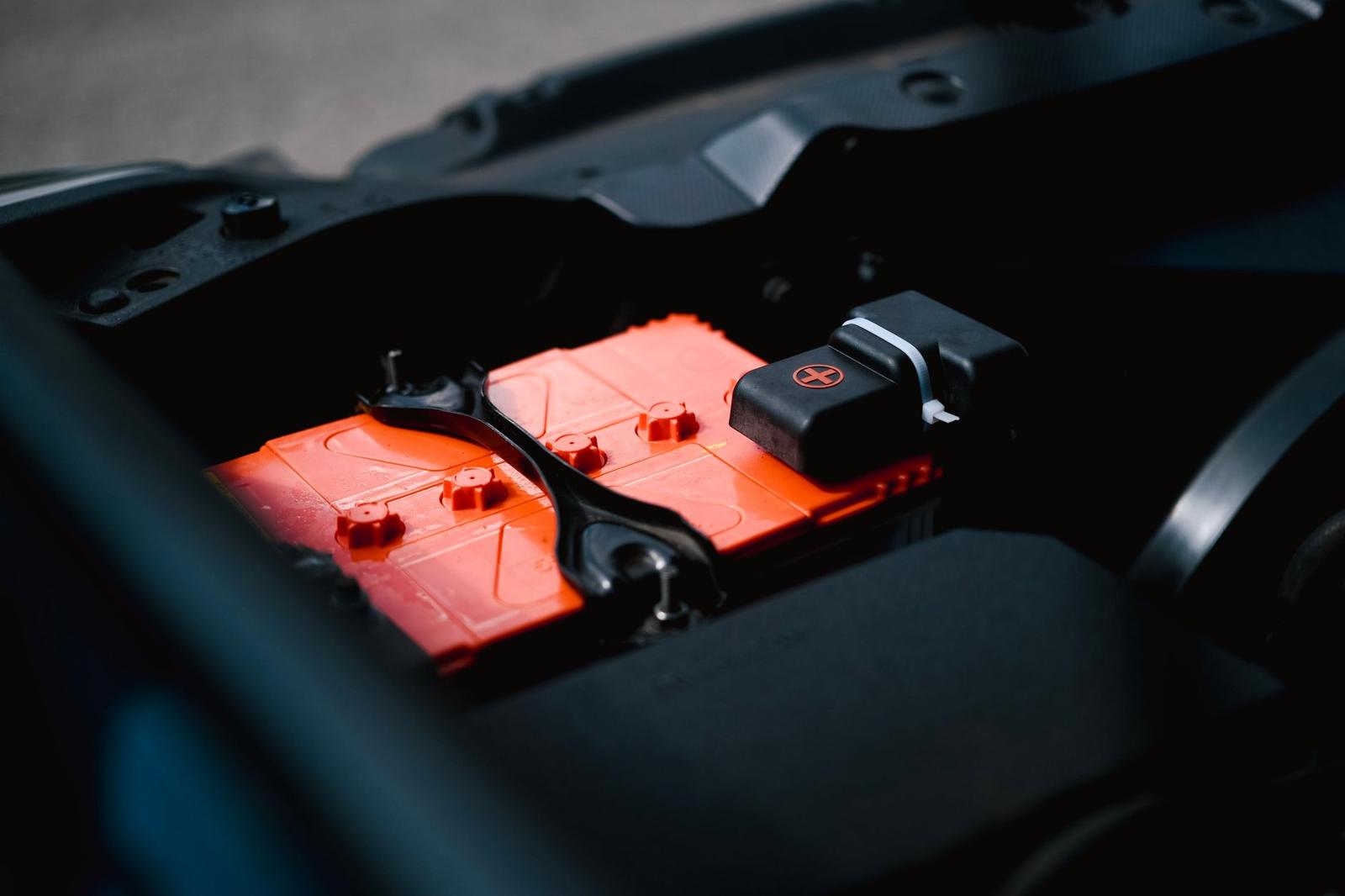
EV battery modules and enclosures
In prismatic and pouch cell modules, compression pads keep stack pressure on the cells as they swell and contract through charge cycles. The pad must hold force over years (low compression set), absorb tolerance stack-up, and meet the flammability target of the pack. PORON® 4701-50 firm and 4701-40 soft are the common choices inside the module; BISCO® silicone appears where temperature or flame performance must exceed what urethane offers, and in enclosure lid gaskets that must keep sealing after a thermal event test.
Sizing the closure force
For a picture-frame lid gasket 12" × 8" outside and 11" × 7" inside (19 in² contact area) at 25% deflection:
| Material | CFD @ 25% | Closure force |
|---|---|---|
| PORON® 4701-40 | 4–11 psi | 76–209 lbf (338–930 N) |
| BISCO® HT-800 | 6–14 psi | 114–266 lbf (507–1,183 N) |
| PORON® 4701-50 | 15–45 psi | 285–855 lbf (1,268–3,803 N) |
Check the fastener spacing and lid stiffness against the upper value, not the lower one. Run your own geometry in the material selector & gasket force calculator.