Pure waterjet
A 0.004"–0.010" stream of water at very high pressure cuts foam without abrasive, without heat and without compressing the edge. That gives the tightest tolerance of any foam process and a square edge even at 4" and more.
- Setup: $50–$150 for CAM programming and nesting; no tooling to buy or store.
- Tolerance: ±0.005"–±0.015", no heat-affected zone, no rule compression.
- Thickness: from thin PORON® to thick Plastazote® and melamine blocks; cut speed falls as thickness rises.
- Best for: prototypes, design iterations, bridge production while a die is made, thick gaskets, parts with small holes a steel rule cannot eject.
Waterjet cuts straight through. It cannot cut a blind pocket. Stepped cavities are made either by CNC routing from one block or by waterjet-cutting each layer and laminating them with PSA.
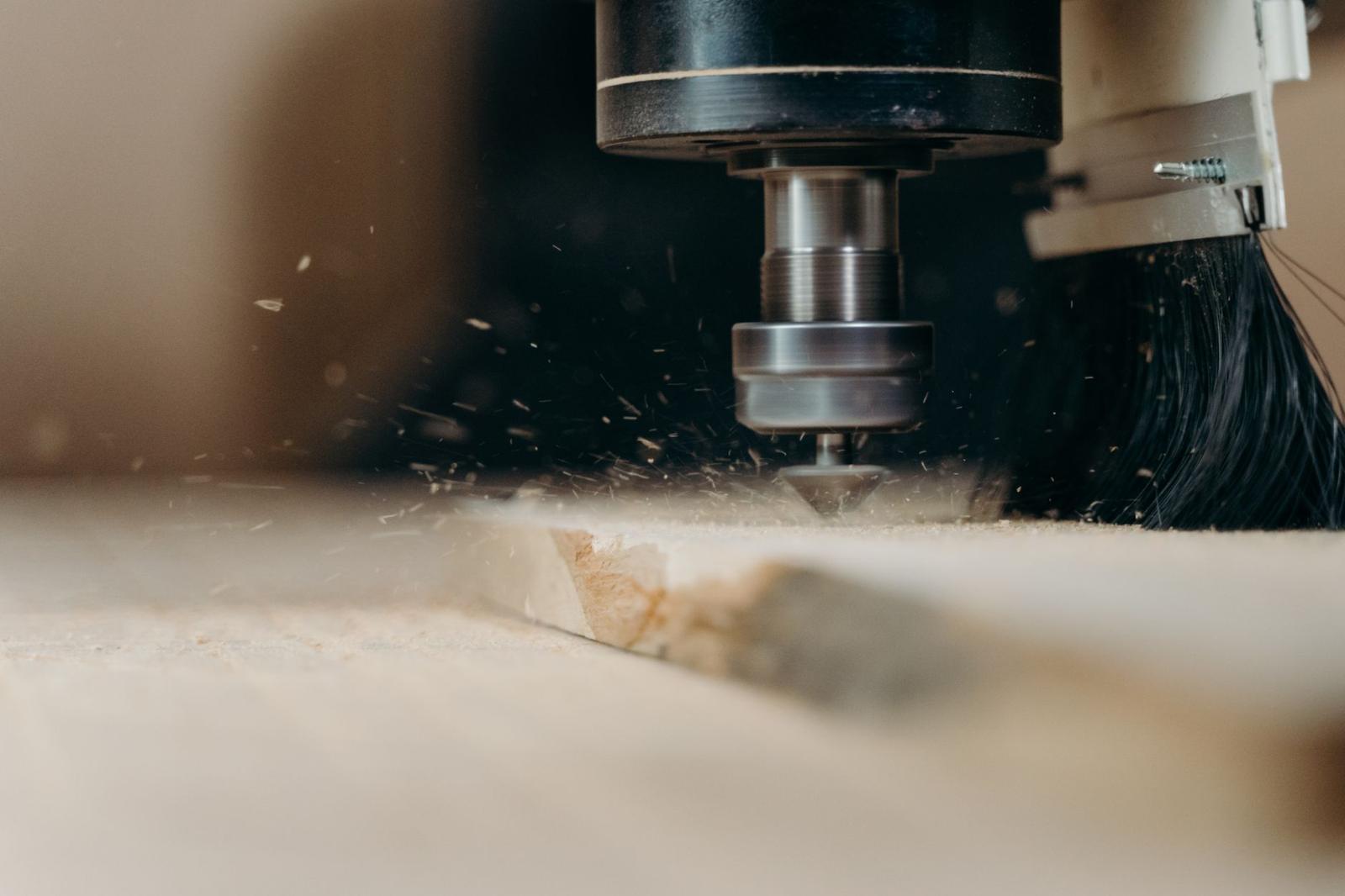
CNC routing & oscillating knife
A 3-axis CNC router with foam tooling, or a flatbed digital cutter with an oscillating or drag knife, cuts from the same CAD data. Routing removes material to make pockets and steps; the knife gives clean, dust-free edges on soft open-cell foams and EVA.
- Setup: $75–$250 CAM programming, more for multi-depth 3D toolpaths.
- Tolerance: ±0.030"–±0.060", i.e. ARPM BL2/BL3 on thick blocks.
- Best for: stepped case inserts, tool-control shadow boards in two-colour XLPE or EVA, instrument cradles, short runs of thick parts.
Waterjet or CNC?
| Question | Waterjet | CNC routing / knife |
|---|---|---|
| Tight 2D tolerance (BL1 or better) | Yes, ±0.005"–±0.015" | Usually not; ±0.030"+ |
| Blind pockets and steps | No (laminate layers) | Yes, from one block |
| Very small holes in thick foam | Yes | Limited by tool diameter |
| Thick blocks, square edges | Yes, to 4"+ | Yes |
| Cost per part at 50 pcs, 6" × 4" pad | Lowest | Slightly higher (longer setup) |
Case inserts and shadow boards
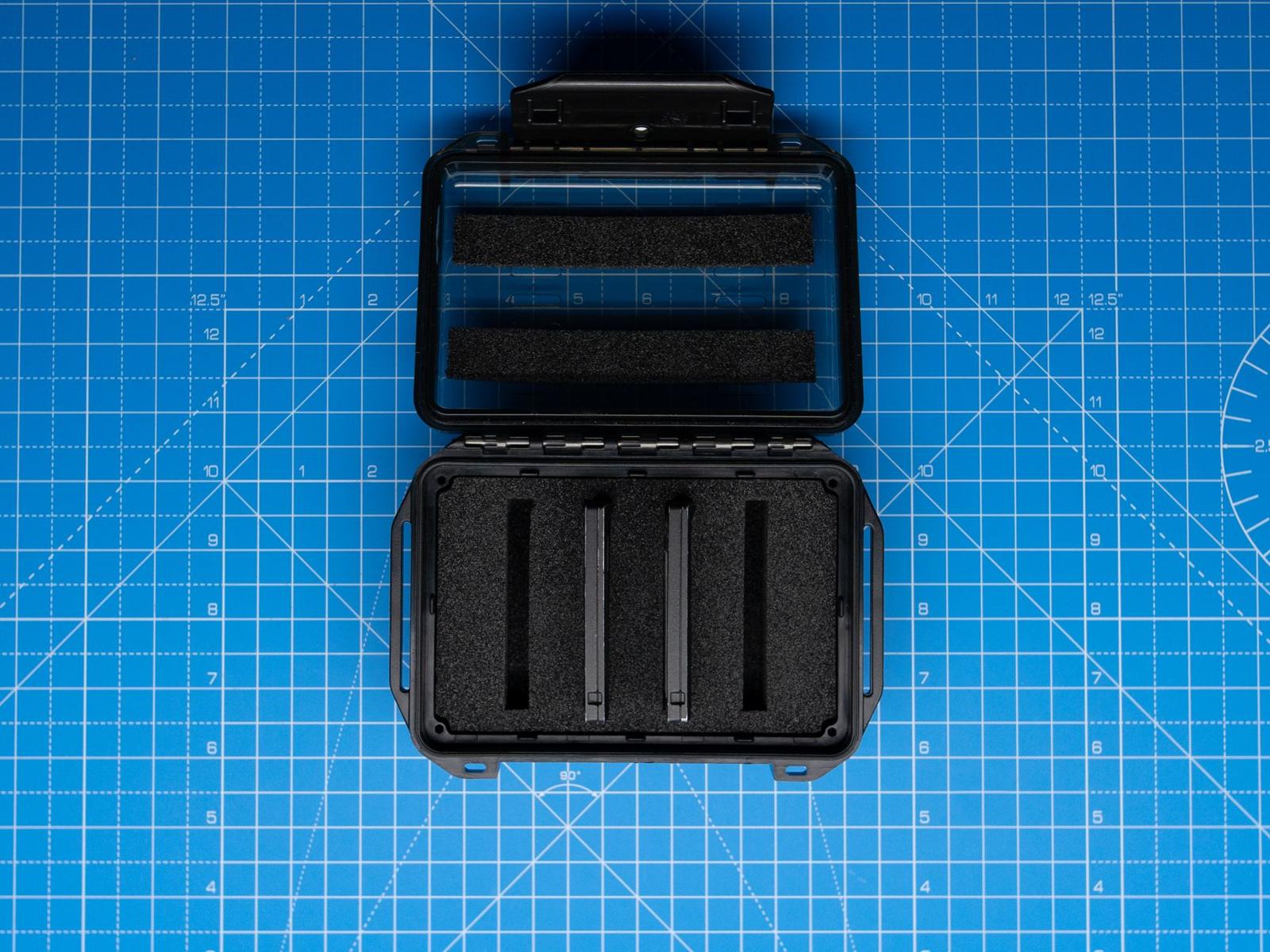
For instrument and tool cases, the usual build is cross-linked polyethylene (Plastazote® LD45 or HD grades) or EVA, routed to the tool outlines with finger-pull cutouts, often in a two-colour laminate so a missing tool shows immediately. For quantities above a few hundred, the same insert can be built from waterjet or die-cut layers laminated together, which lowers the unit cost. Read more in the Plastazote & XLPE guide.
From prototype to production
We usually cut the first articles on waterjet or CNC so the drawing can change for free. Once the design is frozen and the annual volume justifies it, the part moves to a steel-rule or rotary die and the per-part cost drops to cents. The estimator shows that crossover for your part.