From master log to finished part
Technical foams arrive as master logs, buns or rolls from the material manufacturer. Converting turns that stock into a part that fits your assembly. The workflow is the same whatever the final process:
- Skiving and splitting. Buns and logs are split to the specified gauge. Thickness tolerance is set at this stage and follows ARPM thickness classes (ATH 1–4); PORON® and BISCO® are cast or calendered to gauge by the manufacturer, so their thickness tolerance comes from the TDS.
- Lamination. PSA transfer tape, foil, scrim or a second foam is laminated to the sheet before cutting so that every part carries the same adhesive and the liner stays intact for kiss-cutting.
- Cutting. Steel-rule or rotary die, waterjet, CNC router or oscillating knife, chosen by the rules below.
- Inspection and packing. First-article measurement against the drawing, lot labelling to the master roll, Certificate of Conformance, and packing on rolls, sheets or as loose parts.
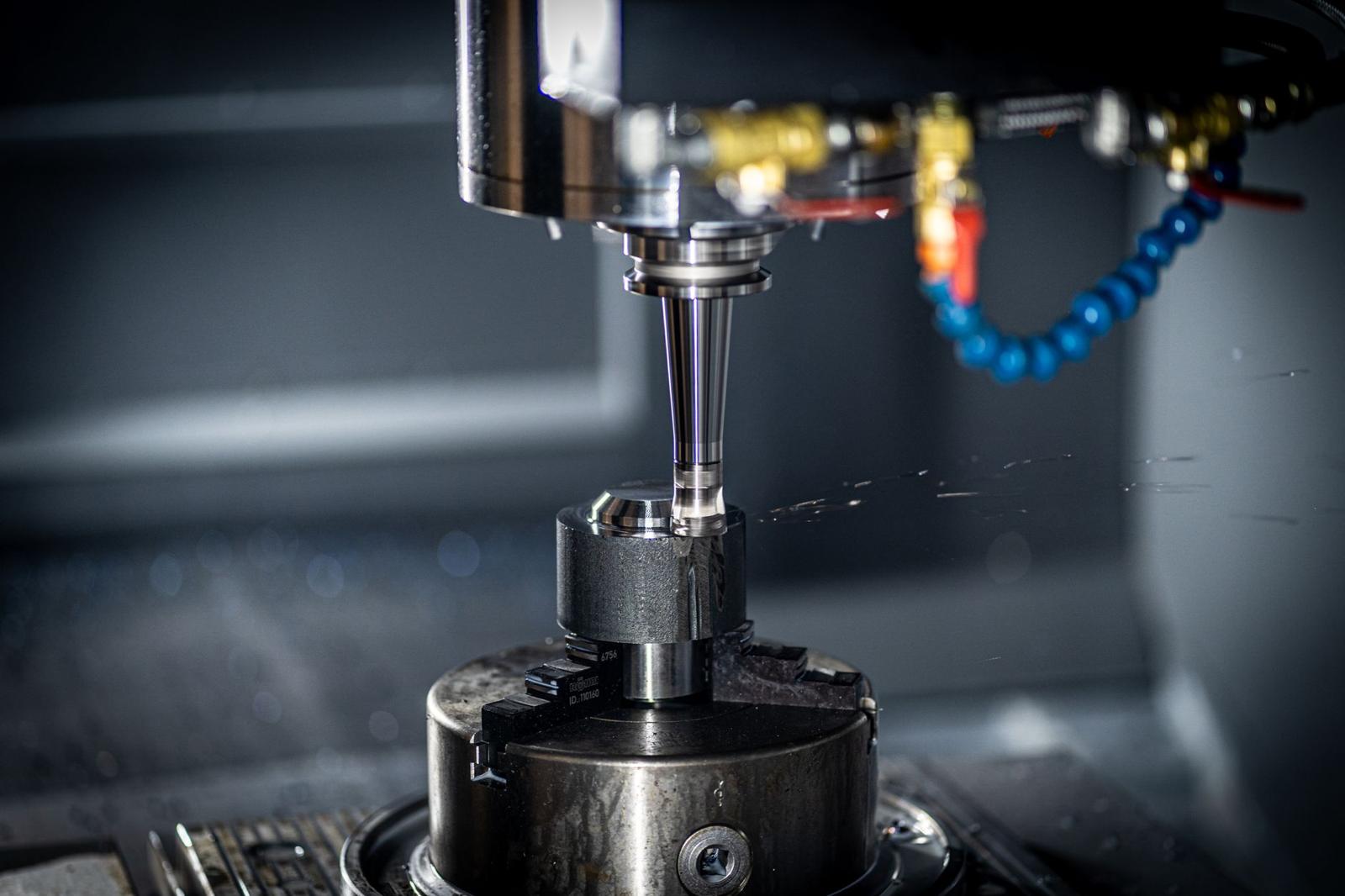
Process selection guide
| Process | Upfront tooling / setup | Typical MOQ | Standard tolerance | Best fit |
|---|---|---|---|---|
| Steel-rule / rotary die cutting | $300–$2,500+ | 500–5,000+ | ARPM BL2 (±0.032"–±0.040"); tight dies ±0.010"–±0.030" | High-volume 2D gaskets, kiss-cut PSA parts on rolls |
| Pure waterjet | $0 tooling, $50–$150 CAM | 1–500 | ±0.005"–±0.015" | Prototypes, tight 2D profiles, thick foam to 4"+ |
| CNC routing / oscillating knife | $0 tooling, $75–$250 CAM | 1–250 | ±0.030"–±0.060" | Multi-depth pockets, stepped inserts, shadow boards |
| PSA lamination | $50–$150 roll setup on short runs | 1+ sheets | Adds 0.002"–0.005" thickness | 3M 467MP / 468MP / 9474LE, silicone dual-liner |
Rule of thumb: under roughly 500 pieces a zero-tooling process almost always wins; above a few thousand flat parts a steel-rule die almost always wins. In between, the break-even depends on perimeter, thickness and PSA. The conversion cost estimator calculates it for your part.
ARPM cut-sponge tolerances
Most foam drawings call out the ARPM (formerly RMA) tolerance classes for cut sponge rather than machined-metal tolerances. Foam is compressible, so a tolerance tighter than the class is measured with a non-contact or low-force method and costs more.
| Class | Dimensions under 1" | Dimensions 1"–6.3" | Typical use |
|---|---|---|---|
| BL1 (precision) | ±0.025" (±0.64 mm) | ±0.032" (±0.81 mm) | Electronics gaskets, display pads, tight housings |
| BL2 (commercial) | ±0.032" (±0.81 mm) | ±0.040" (±1.02 mm) | Default for die-cut gaskets and pads |
| BL3 (relaxed) | Wider than BL2 | Wider than BL2 | Packaging, cushioning, non-critical fits |
Which drawings we take
DXF and DWG for flat parts, STEP for stepped inserts and multi-layer assemblies, PDF with dimensions for everything else. A sketch with the footprint, thickness and material is enough for a first estimate; we return DFM notes (minimum web width, hole-to-edge distance, nesting direction, liner tab placement) with the quote.